Feasibility
Studies
Evaluate viability, define scope, and establish realistic budgets before committing to design or construction.

Search
Evaluate viability, define scope, and establish realistic budgets before committing to design or construction.
One integrated team from concept through completion, with no gaps between design and execution.
Our own craftspeople execute the work. No subcontractors, no variance in quality or accountability.
The same crews and safety culture from your capital projects, keeping your facility running in between.
CR Meyer's name on the project means CR Meyer's people doing the work. One accountable team, start to finish.
OSHA VPP Star-level safety isn't a program. It's how every crew operates, every day.
Decades of experience executing complex projects in facilities that never stop running.
Where CR Meyer invests in the next generation of craft and project leadership.
135+ years of industrial construction, built on doing the work ourselves.
Our team is ready to help you plan, design, and build with confidence.
Since 1888, grown from a regional trades contractor into one of the top industrial contractors in the country.
The experienced leaders and craftspeople behind every CR Meyer project.
Midwest-based facilities, positioned to serve industrial clients wherever the work takes us.
Trades, engineering, and project management opportunities with a contractor that invests in its people.
Piping Expertise
Piping is one of the most coordination-intensive scopes in industrial construction. It runs through every part of a facility, intersects with mechanical, structural, and electrical work at every turn, and has to be installed correctly before startup can happen. CR Meyer's pipefitters bring the field experience, the quality discipline, and the project coordination to execute piping projects in complex industrial environments — reliably, and as part of the broader project team.
Industrial piping requires more than mechanical skill. It requires tradespeople who understand process systems, can work from detailed drawings in complex environments, and have the experience to recognize when field conditions require a decision — and make the right one. CR Meyer's pipefitters have that experience across a wide range of industrial environments and project types.
Piping touches nearly every other scope on an industrial project — which means coordination risk follows it everywhere it goes.
Pipe routes depend on structural steel being in place. Tie-ins have to be coordinated with operations. Piping sequences affect and are affected by millwrighting, electrical, and mechanical scopes running on the same schedule. When piping is handled by a subcontractor outside the broader project team, those interdependencies become coordination risks.
CR Meyer self-performs piping installation, with pipefitters coordinated by the same field leadership managing the full project. Our in-house fabrication facility adds another layer of advantage — spools are fabricated to match field dimensions, delivered on the installation schedule, and produced to the same quality standards as the field work.
Piping moves with structural, mechanical, and electrical scopes — not around them.
Prefabricated pipe is delivered on the installation schedule, to the right dimensions, without third-party delivery risk.
System modifications are coordinated with your operations team from the start — not managed reactively.
From fabrication through field installation, one team owns the standard.
Piping is usually one of the last critical scopes to close out, which means coordination problems upstream tend to land here. When CR Meyer manages piping alongside the mechanical, structural, and civil work it ties into, those problems get caught in planning rather than in execution. The result is a scope that finishes clean, on schedule, and without the rework that comes from trades operating independently.
Steam, condensate, chemical, water, and process fluid piping systems in paper mills represent some of the most complex piping scopes in any industrial environment — systems that have to be installed correctly because startup failure in a continuous-operation mill has immediate production consequences.
Process piping in refineries and petrochemical facilities requires code-compliant installation, rigorous quality documentation, and coordination with facility operations teams in environments where pressurized systems, hazardous materials, and regulatory requirements govern how the work is planned and executed.
Steam, cooling, and process piping in power generation facilities requires pressure-rated installation, in-shop testing via CR Meyer's fabrication facility, and coordination with outage schedules where the window for piping completion is fixed and cannot slip.
Slurry, water, and process piping in mineral processing facilities involves high-wear materials, abrasion-resistant specifications, and system modifications that have to be coordinated around active conveyor and processing equipment — not managed as a separate subcontractor scope.
Sanitary piping systems in food manufacturing facilities require stainless steel installation to food-grade standards, with weld quality and surface finish documentation that satisfies FDA and USDA requirements — work that most piping contractors aren't equipped to perform to the required standard.
Process and mechanical piping across heavy manufacturing depends on pipefitters coordinated with the mechanical and structural installation schedule — not managed as a subcontractor scope that introduces sequencing risk into a multi-trade project.
Hydraulic, pneumatic, and process piping in scrap processing facilities requires installation in demanding physical environments, coordinated with equipment installation and the operational constraints of facilities that process material continuously.
Process and mechanical piping across heavy manufacturing depends on pipefitters coordinated with the mechanical and structural installation schedule — not managed as a subcontractor scope that introduces sequencing risk into a multi-trade project.
Coordination-intensive sequences, tight outage windows, systems that had to perform from day one of startup. Here's where CR Meyer's piping capability has been put to work.
Piping
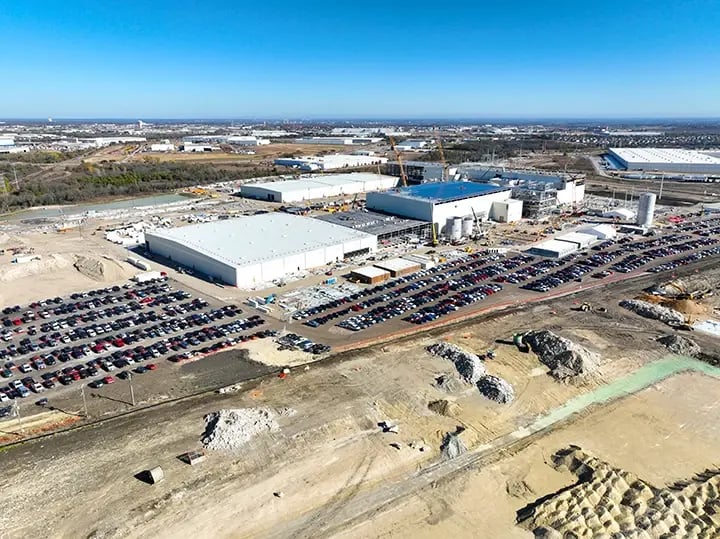
A manufacturer needed more than a contractor to install a new coated recycled paperboard (CRB) machine. They needed a partner to build an entire 119-acre production campus from the ground up, and deliver it at scale.
Piping
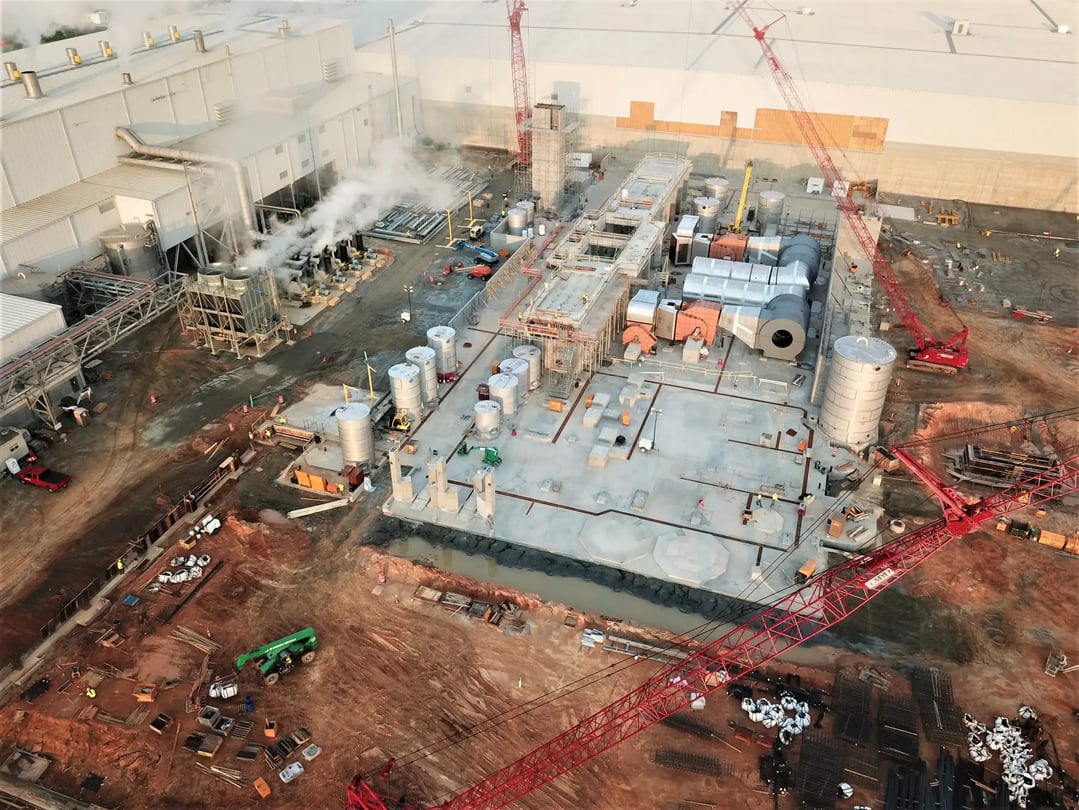
Our pulp and paper customer needed more than a construction crew to build their new greenfield tissuemaking and converting campus in Macon, Georgia. They needed a single partner who could deliver an entire production ecosystem — from raw site to fully operational facility — at a scale few contractors can manage.
Piping
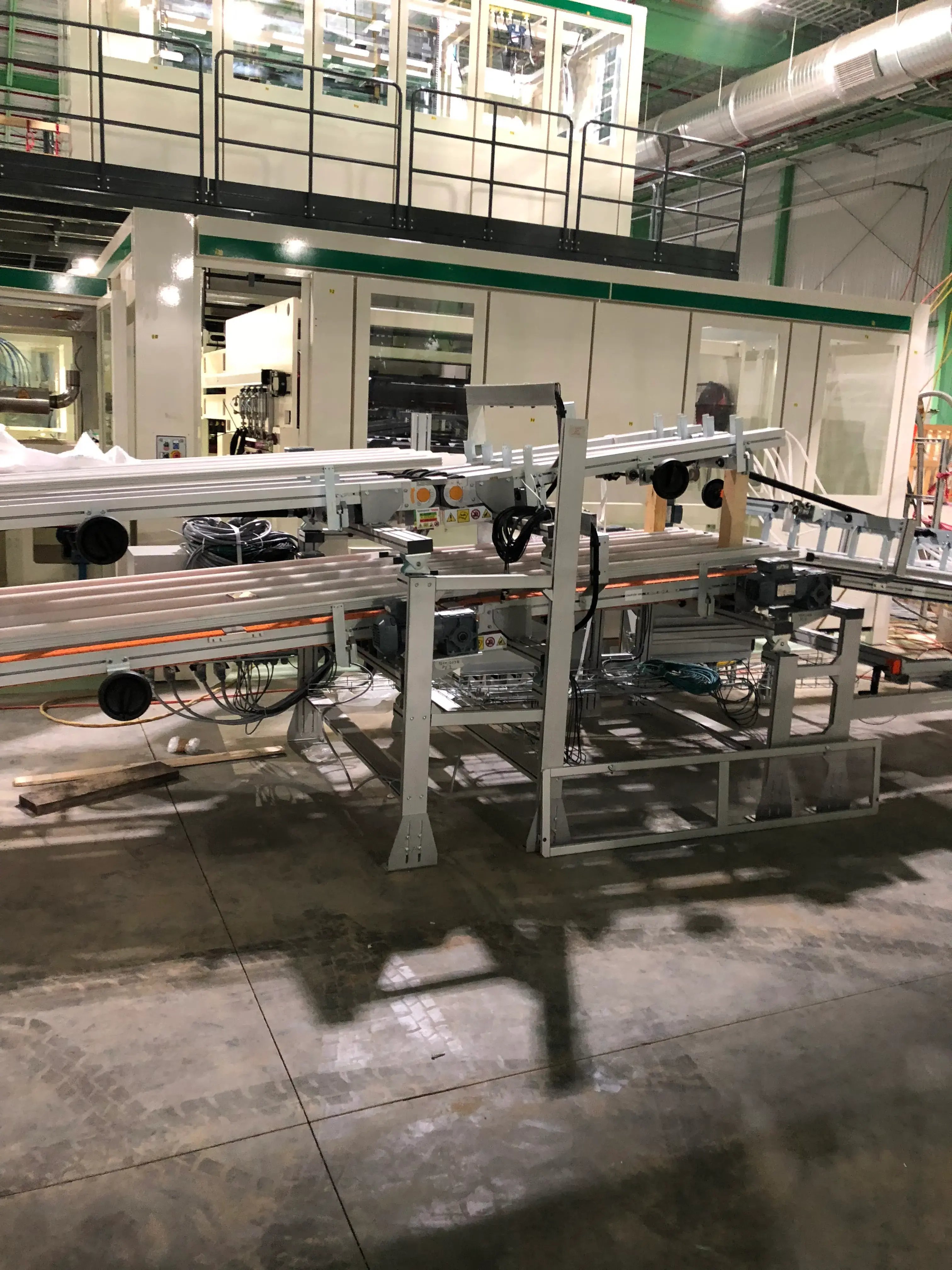
Our pulp and paper customer needed to expand their converting capacity with four new production lines — and needed a contractor who could coordinate complex, multi-system installations with precision, on time and on budget.
Let's talk about the work, the timeline, and how CR Meyer can help you execute it reliably.
Whether you're managing a capital project with complex process piping requirements, planning shutdown work with tight tie-in windows, or looking for a piping partner who also controls fabrication and field installation under one contract, CR Meyer has the pipefitters and the project experience to deliver. Tell us about your project and we'll put the right team together.