Feasibility
Studies
Evaluate viability, define scope, and establish realistic budgets before committing to design or construction.

Search
Evaluate viability, define scope, and establish realistic budgets before committing to design or construction.
One integrated team from concept through completion, with no gaps between design and execution.
Our own craftspeople execute the work. No subcontractors, no variance in quality or accountability.
The same crews and safety culture from your capital projects, keeping your facility running in between.
CR Meyer's name on the project means CR Meyer's people doing the work. One accountable team, start to finish.
OSHA VPP Star-level safety isn't a program. It's how every crew operates, every day.
Decades of experience executing complex projects in facilities that never stop running.
Where CR Meyer invests in the next generation of craft and project leadership.
135+ years of industrial construction, built on doing the work ourselves.
Our team is ready to help you plan, design, and build with confidence.
Since 1888, grown from a regional trades contractor into one of the top industrial contractors in the country.
The experienced leaders and craftspeople behind every CR Meyer project.
Midwest-based facilities, positioned to serve industrial clients wherever the work takes us.
Trades, engineering, and project management opportunities with a contractor that invests in its people.
Concrete Expertise
In industrial construction, concrete is the foundation that determines whether everything installed above it performs as designed. CR Meyer concrete crews bring the structural knowledge, field experience, and trade coordination to execute concrete scopes correctly the first time, in environments where getting it wrong has significant consequences.
Industrial concrete is a different discipline than commercial flatwork. The tolerances are tighter, the loads are heavier, and the coordination requirements — with mechanical installation, structural steel, and equipment positioning — are more demanding. CR Meyer's concrete crews have spent careers working in exactly these conditions.
Foundation work is one of the earliest scopes on any project — and one of the most consequential. Errors in layout, anchor bolt positioning, or pour quality don't just create rework; they create schedule problems that ripple through every trade that follows. CR Meyer's concrete crews understand that the work they do sets the conditions for everything that comes next.
Concrete errors don't just create rework — they create schedule problems that ripple through every trade that follows.
Foundations have to be placed before equipment can be set. Slabs have to cure before mechanical installation can begin. Structural pours have to coordinate with steel erection and piping. When concrete is handled by a subcontractor working independently, those handoffs become schedule risks.
CR Meyer performs concrete with its own workforce — the same self-perform model that governs our millwrighting, ironwork, and carpentry. Anchor bolt layouts are coordinated directly with the millwrights setting the equipment. Slab work is sequenced with the piping and structural scopes depending on it. When a field condition requires a change, the decision gets made within one accountable team.
Foundation and slab work is planned alongside equipment installation — not handed off after the fact.
Layout accuracy is confirmed against mechanical and structural requirements before concrete is placed.
Concrete scopes are planned to enable the trades that depend on them — not constrain them.
Quality control is managed by the same team responsible for the full project outcome.
On multi-trade projects, pour schedules affect steel erection, equipment placement, and sometimes production timelines in active facilities. When the concrete crew is outside the project team, those dependencies get managed through requests and notifications. When they're inside it, adjustments happen in real time. For owners where schedule slippage carries real cost, that distinction matters.
Equipment foundations for paper machines, press sections, and pulping systems require anchor bolt precision and pour quality that determines whether the equipment performs as designed.
Heavy equipment foundations in mineral processing environments must account for extreme dynamic loads — crusher and mill drive foundations require concrete crews who understand the mechanical requirements above them.
Turbine and generator foundations in power generation facilities require structural precision and coordination with mechanical installation that subcontracted concrete rarely delivers.
Containment structures, equipment pads, and structural concrete in refineries must meet regulatory specifications and coordinate with the piping and mechanical scopes they support.
Equipment pads, structural pours, and facility expansions across heavy manufacturing depend on concrete crews who coordinate with the mechanical and structural trades following them.
Good concrete work is invisible. Bad concrete work shows up in every trade that follows.
Concrete
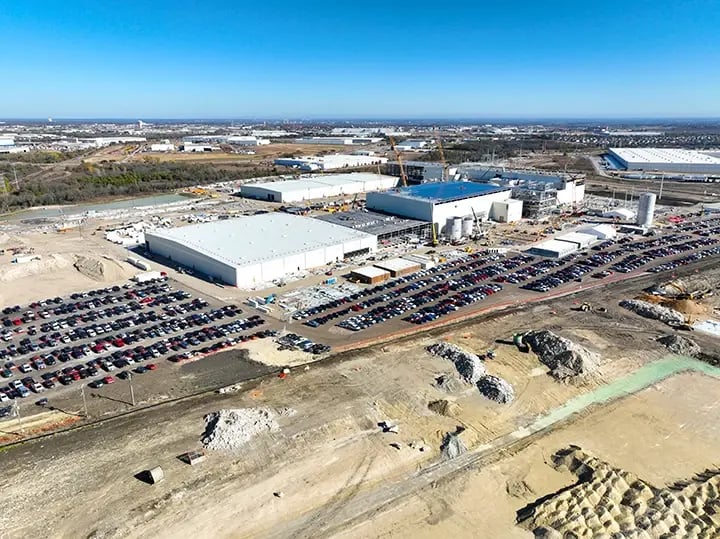
A manufacturer needed more than a contractor to install a new coated recycled paperboard (CRB) machine. They needed a partner to build an entire 119-acre production campus from the ground up, and deliver it at scale.
Concrete
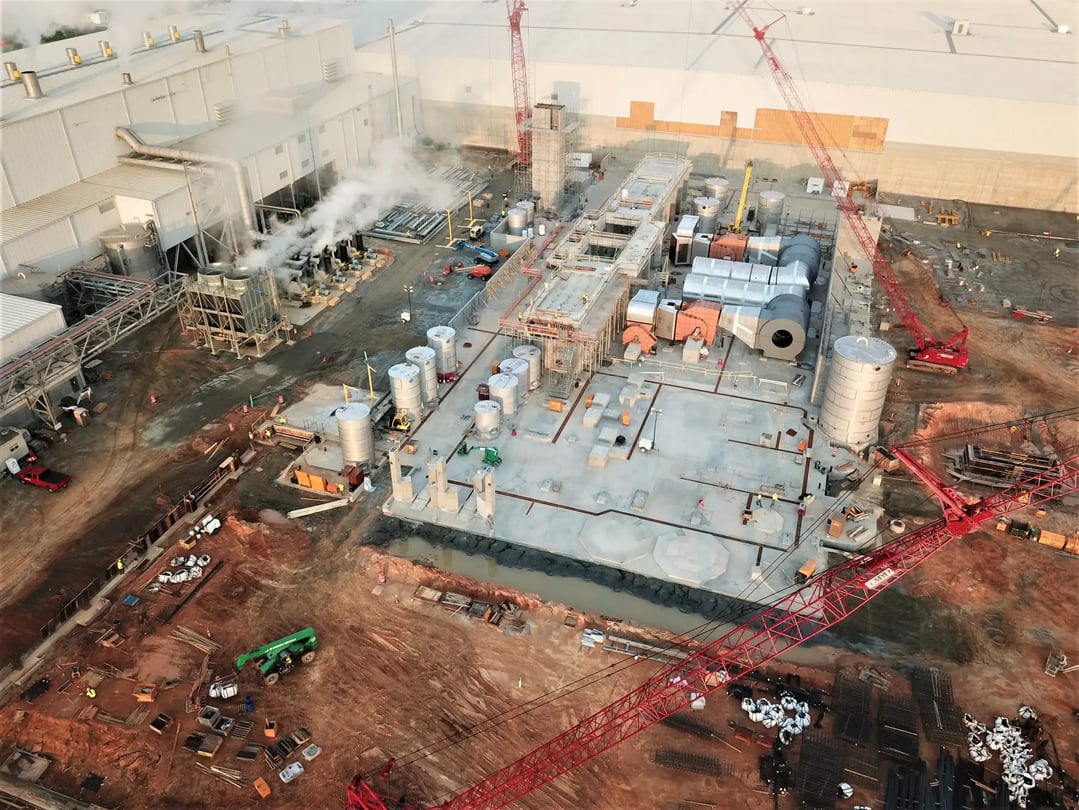
Our pulp and paper customer needed more than a construction crew to build their new greenfield tissuemaking and converting campus in Macon, Georgia. They needed a single partner who could deliver an entire production ecosystem — from raw site to fully operational facility — at a scale few contractors can manage.
Concrete
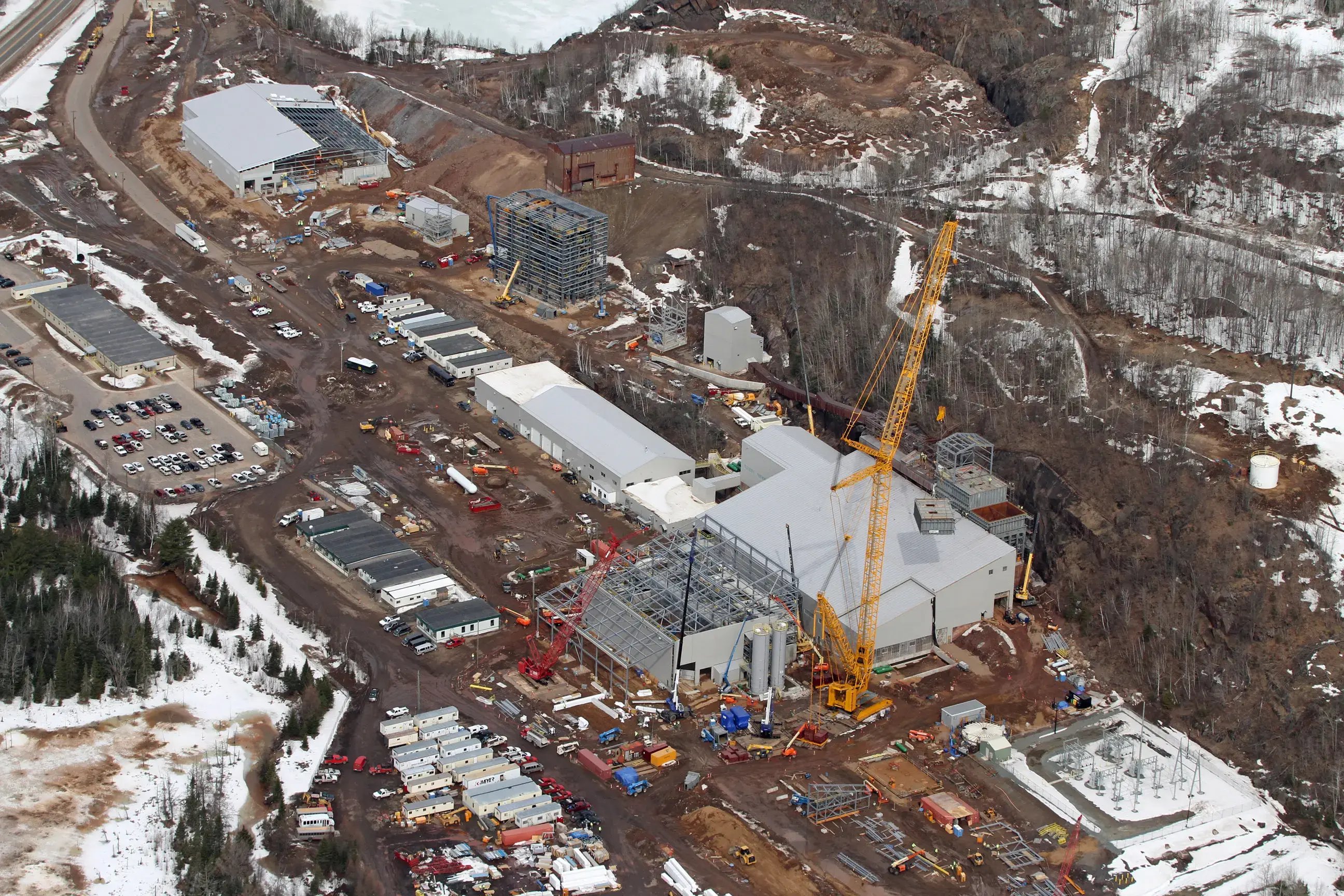
This mining project required construction across two distinct sites in Michigan’s Upper Peninsula — a historic mill renovation and an all-new mine facility — simultaneously, in one of the most demanding winter climates in the Midwest.
Yes. We perform concrete repairs in operating facilities, including foundation repairs, slab restoration, and repairs to equipment pads that have deteriorated under load or chemical exposure. Work in active facilities is planned to protect both the workforce and surrounding operations, with containment, access control, and sequencing all established before work begins.
Let's talk about the scope, the environment, and what it takes to get the foundation right.
Whether you're planning a major equipment installation that starts with a foundation, managing a facility expansion with significant structural concrete scope, or working through a repair in an active plant, CR Meyer has the concrete crews and project experience to handle it. Tell us about your project and we'll put the right team together.